Back to Home5 System Designs Available
Deep-Dive Engineering Blogs

Design Decision Blogs & System Architectures

In-depth architectural breakdowns answering: why specific databases and protocols were selected, how real-world bottlenecks were resolved, and how production microservices scale.

01·fullstack Featured Case Study

Multi-Tenant LMS - Enterprise Educational Platform

Zero-Egress HLS Streaming & Microservice LMS Architecture

Educational institutes face high operational overhead and prohibitive SaaS costs when managing multi-role onboarding, video delivery, and student assessment. This LMS provides a unified, low-cost multi-tenant platform with role-based access control, zero-egress video streaming, and real-time classroom interaction.

Key Architectural Trade-Off:

“Why MongoDB instead of PostgreSQL?” → Educational content (courses, modules, chapters, varied quiz types) is deeply nested and dynamic. MongoDB document storage prevents expensive multi-table SQL joins while maintaining rapid query flexibility.
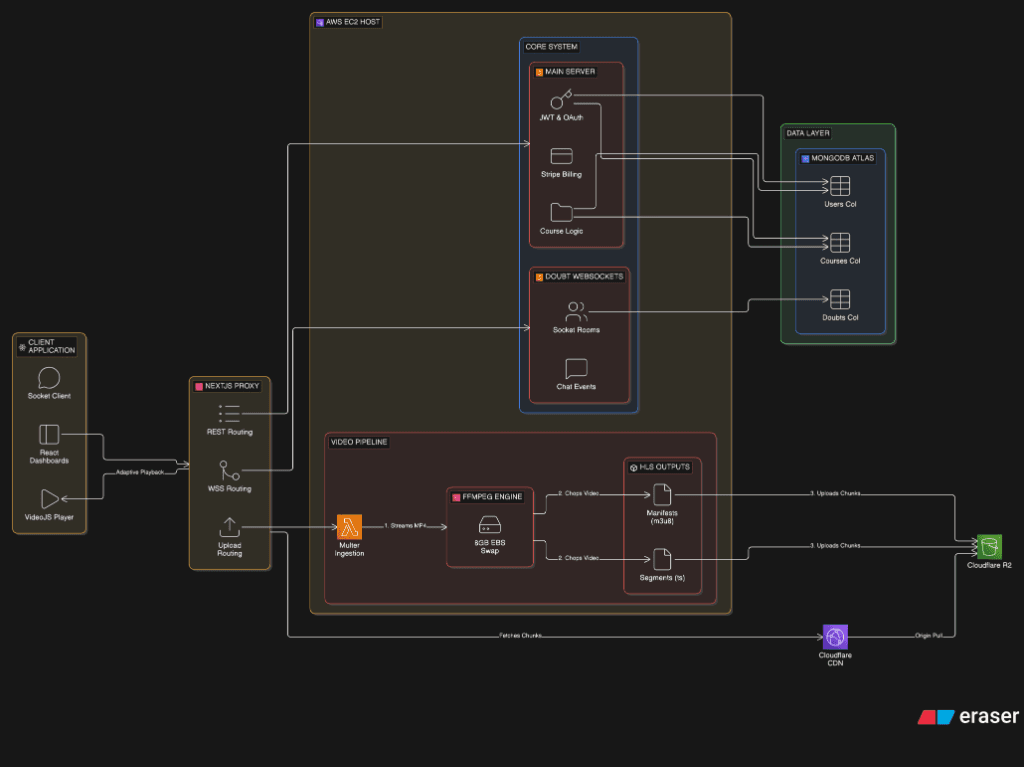
Multi-Tenant LMS - Enterprise Educational Platform Architecture
View Diagram Spec
Next.jsTypeScriptNode.jsExpress.jsMongoDB
02·blockchain Featured Case Study

RemitPay

Government-Controlled Blockchain Remittance System

Cross-border remittances are plagued by high friction, delayed settlement times, and opaque intermediary fees. RemitPay models a sovereign-regulated decentralized remittance system where anti-money laundering (AML) compliance and tier limits are codified directly on-chain while enabling instant peer-to-peer settlement.

Key Architectural Trade-Off:

“Why on-chain KYC verification tracking?” → Ensures regulatory compliance cannot be bypassed at the frontend or API layer, providing cryptographic proof of compliance.

SolidityEthereumOpenZeppelinNext.jsReact
03·blockchain Featured Case Study

Flute (ArtiFusion)

AI-Powered NFT Generator & Ethereum Marketplace

Creators without technical Web3 knowledge encounter significant barriers when transforming generative AI art into tradeable cryptographic assets with decentralized storage guarantees.

Key Architectural Trade-Off:

“Why IPFS instead of cloud storage for NFT assets?” → NFT metadata must remain immutable and verifiable by token holders forever; IPFS content identifiers (CIDs) prevent rug pulls.

Next.jsReactTypeScriptEthereumSolidity
04·fullstack Featured Case Study

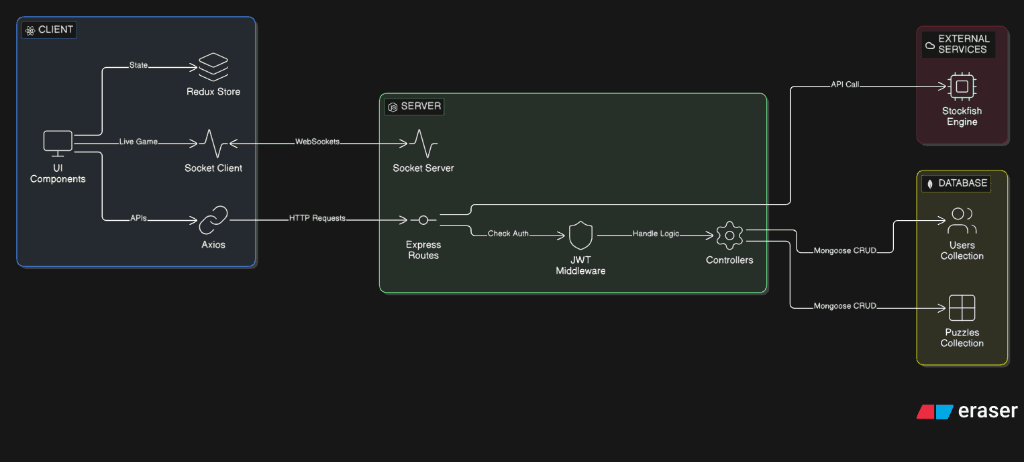
Chess Master - Real-Time Multiplayer Chess Platform

Play chess with AI and friends in real-time

Real-time multiplayer chess platforms often suffer from high cloud compute bills and backend freezes when running CPU-intensive chess engine evaluations. React Chess solves this by combining global Socket.IO multiplayer with zero-cost, client-side Stockfish Web Workers and instant FEN game analysis.

Key Architectural Trade-Off:

“Why Web Workers for Stockfish?” → Running chess engine calculations on a central Node.js server for thousands of concurrent players would crash server CPU. Web Workers offload 100% of compute to client browser threads with zero cloud cost.

Chess Master - Real-Time Multiplayer Chess Platform Architecture
View Diagram Spec
MongoDBExpress.jsReact.jsNode.jsWebSockets
05·ai Featured Case Study

Hiraya - AI-Powered Campus Assistant

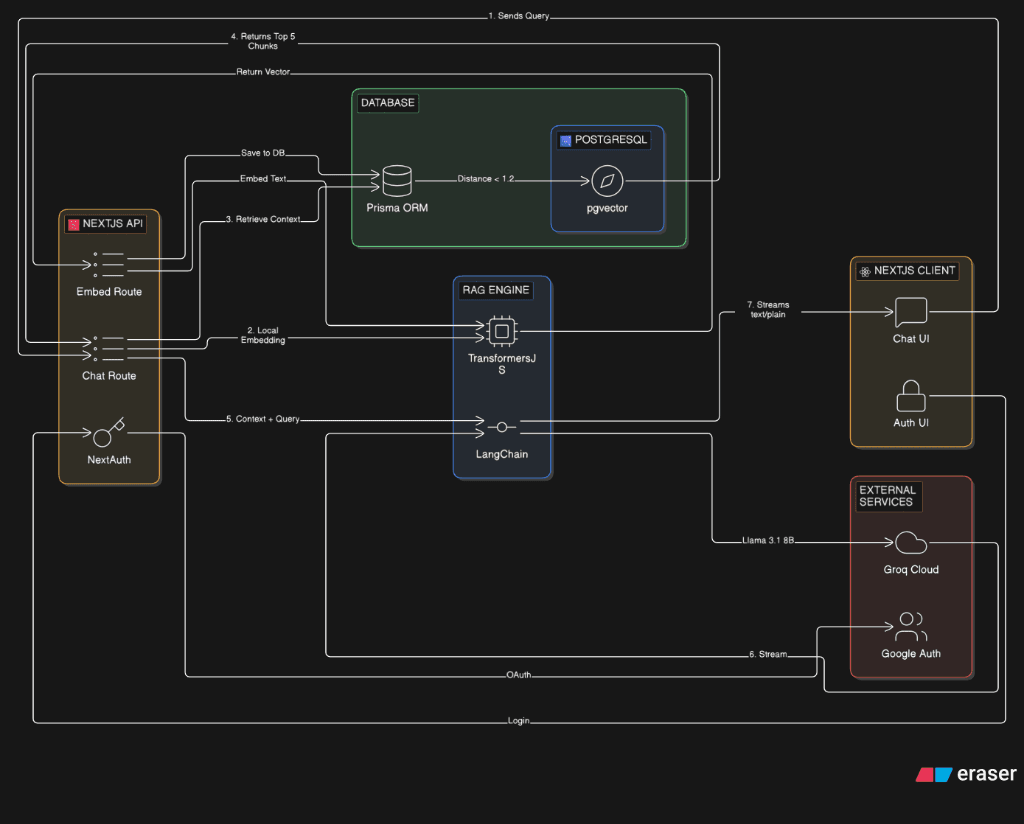
Smart campus companion with RAG architecture

University students frequently struggle to find accurate, up-to-date information regarding campus rules, placements, and exam notices scattered across PDFs. Hiraya is an AI Campus Assistant for NIT Hamirpur using strict Retrieval-Augmented Generation (RAG) to provide verified, hallucination-free streamed answers from a maintainer knowledge base.

Key Architectural Trade-Off:

“Why Local Embeddings (transformers.js)?” → External APIs like OpenAI introduce recurring costs and network round trips. Running all-MiniLM-L6-v2 locally in WebAssembly/ONNX reduced embedding costs to $0 and cut retrieval latency.

Hiraya - AI-Powered Campus Assistant Architecture
View Diagram Spec
React.jsNext.jsTypeScriptSQLPrisma ORM